
After a traumatic experience, people can respond in very different ways. Some recover with time, while others continue to experience distressing memories, nightmares, avoidance, poor sleep, fear, anger or a constant feeling that something is wrong. When these problems continue and begin to affect everyday life, a professional assessment can help explain what is happening.
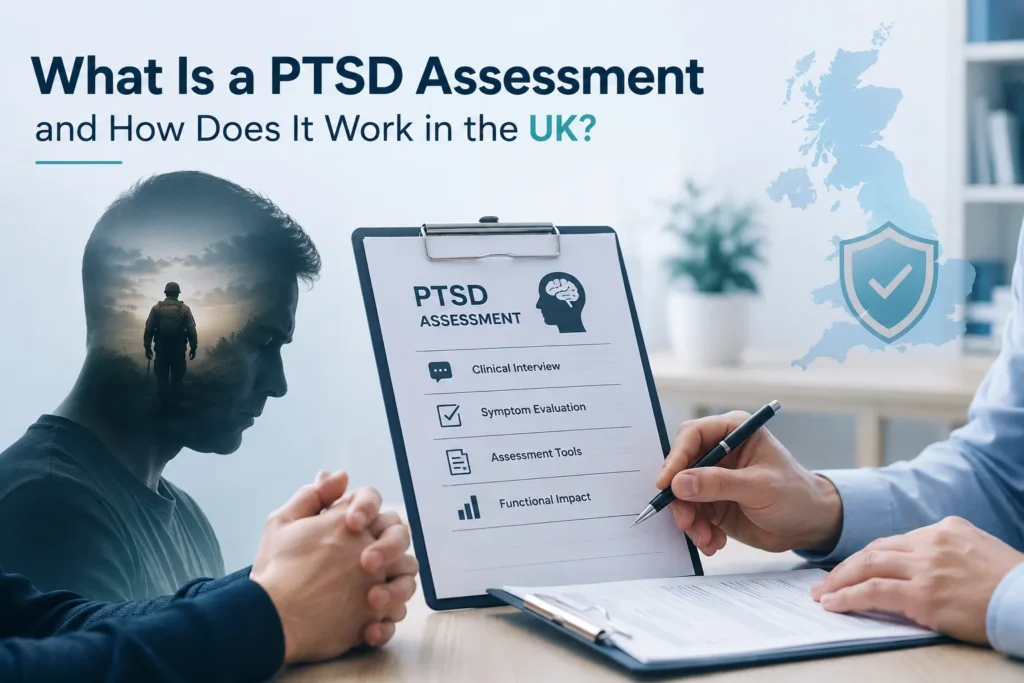
A PTSD assessment looks at trauma related symptoms, their severity, their effect on daily life and the person’s wider physical, psychological and social circumstances. It is not simply a questionnaire or a conversation about one symptom. NICE recommends a comprehensive assessment that considers physical, psychological and social needs as well as risk. Its PTSD guideline was last reviewed on 8 April 2025.
What Is a PTSD Assessment?
A PTSD assessment is a professional evaluation of symptoms that may have developed following a traumatic event. The assessment considers the person’s experience, current symptoms, daily functioning and wider history to determine whether the clinical picture is consistent with PTSD or another condition.
A clinician may ask about unwanted memories, nightmares, flashbacks, avoidance, hypervigilance, changes in mood and thinking, emotional reactions, relationships, sleep and concentration. NICE specifically recommends asking about re experiencing, avoidance, hyperarousal, dissociation, changes in mood and thinking and functional impairment when assessing for PTSD.
Who May Need a PTSD Assessment?
Not everyone who experiences trauma develops PTSD. Feeling upset, anxious or unsettled after a traumatic event can be part of the normal response to what happened. An assessment may become useful when symptoms continue, become difficult to manage or start affecting work, relationships, education, sleep or everyday activities.
Someone may also seek an assessment for a specific reason. They may want to understand their symptoms, obtain a clinical opinion, plan treatment or provide professional evidence for a legal or immigration matter. These situations can require different types of assessment and reporting, so it is useful to explain the purpose before an appointment is arranged.
What Happens During a PTSD Assessment?
A PTSD assessment usually begins with a discussion about why the assessment has been requested and what difficulties the person is experiencing. The clinician may then explore the traumatic experience, symptoms, previous mental health history, physical health, treatment and the effect of the symptoms on everyday life. The level of detail needed can vary from person to person.
The assessment may also include questions about safety and risk. NICE recommends that PTSD assessment should be comprehensive and include a risk assessment. A good assessment should be handled carefully because discussing traumatic experiences can be difficult, especially for people who have experienced repeated or severe trauma.
What Symptoms Are Considered During a PTSD Assessment?
PTSD can involve several groups of symptoms. Re experiencing can include unwanted memories, nightmares and flashbacks. Avoidance may involve staying away from people, places, conversations or activities connected with the trauma. Hyperarousal can involve feeling constantly alert, easily startled, irritable or unable to relax.
The assessment can also consider negative changes in mood and thinking, emotional numbing, dissociation, difficulties with emotional regulation and problems in relationships. NICE also highlights functional impairment, which means looking at how symptoms affect areas such as work, relationships and daily activities.
How Is PTSD Diagnosed in the UK?
A PTSD diagnosis should come from an appropriate clinical assessment rather than an online questionnaire alone. Screening tools can help identify people who may have significant symptoms, but they are not a replacement for professional clinical judgement.
The clinician may consider the traumatic experience, symptoms, pattern and duration of difficulties, functional impact, previous treatment, physical health, other mental health symptoms and risk. NICE recommends a comprehensive approach because PTSD can appear alongside other difficulties and because the person’s wider circumstances can affect both assessment and care.
What Is the Difference Between PTSD and Complex PTSD?
Complex PTSD includes the core features of PTSD but can also involve additional difficulties. These can include problems with emotional regulation, a persistent negative view of oneself and ongoing difficulties in relationships. NICE recognises complex PTSD within its guidance and notes that it can occur after prolonged or repeated traumatic experiences.
Examples of traumatic experiences associated with PTSD can include serious accidents, assault, abuse, war and conflict and torture. NICE also recommends considering the needs of refugees and asylum seekers who may be at increased risk of PTSD.
Can Someone Have PTSD Without Realising It?
It is possible for people to live with trauma related symptoms without recognising them as signs of a mental health condition. Someone may avoid certain places, stop discussing what happened, work constantly to stay distracted or accept poor sleep as part of normal life. These behaviours do not prove PTSD, but they can be useful areas to explore during an assessment.
This is one reason why a proper assessment looks at the whole pattern rather than one symptom. A person may have nightmares, for example, but that does not automatically mean they have PTSD. The clinician needs to understand how the symptoms fit together and how they affect the person’s life.
Can You Get a Private PTSD Assessment in the UK?
Private PTSD assessment services are available in the UK, but the right service depends on what the person needs. Someone seeking help with symptoms may need a clinical assessment and treatment recommendations. Someone who needs evidence for legal proceedings may require a report prepared for a specific purpose.
It is therefore worth asking what the assessment will cover before booking. A clinical assessment and a medico legal assessment are not automatically the same thing. The professional’s qualifications, experience and the intended use of the report all matter.
Can a PTSD Assessment Be Used for Legal or Immigration Purposes?
A PTSD assessment can be relevant to legal or immigration matters, but the report needs to match the purpose for which it is being prepared. A clinical report may describe symptoms and provide a diagnostic opinion, while a medico legal report may need to answer specific questions set by a solicitor or another legal professional.
A diagnosis by itself may not answer the legal question. The report may need to explain the clinical evidence, functional impact and other relevant issues within the professional’s area of expertise. For immigration matters, the requirements can vary depending on the circumstances, so the clinician should understand what the report is intended to address.
What Is Included in a PTSD Assessment Report?
The exact format depends on the purpose of the assessment and the professional preparing it. A report may include the reason for referral, relevant background, trauma history, current symptoms, clinical observations, assessment findings, diagnostic opinion where appropriate, functional impact, risk considerations and recommendations.
A report prepared for legal or immigration use may need additional information depending on the instructions. The important thing is that the report should be clear, evidence based and within the professional’s expertise. It should explain the findings rather than simply repeat the person’s account.
How Long Does a PTSD Assessment Take?
There is no single appointment length that suits every person. A straightforward assessment may require less time than one involving several traumatic experiences, complex symptoms, previous treatment or extensive documentation.
The purpose of the assessment also affects the amount of work involved. A detailed report for legal or immigration purposes may require more time than a basic clinical consultation because the professional may need to review additional information and prepare a structured report.
What Should You Take to a PTSD Assessment?
If you have them, useful documents can include previous psychological reports, medical records, medication information, treatment history, referral information and relevant legal or immigration documents. These records can help the clinician understand the wider history and avoid relying only on memory during the appointment.
You do not need to create a perfect file before an assessment. If you are unsure what to provide, ask the service before the appointment. They can tell you which documents are relevant to the type of assessment you are having.
What Happens After a PTSD Assessment?
The next step depends on the findings and the reason for the assessment. You may receive a clinical opinion, treatment recommendations, a referral to another service or a written report. If the assessment was arranged for legal or immigration purposes, the report may be provided to the authorised person or organisation according to the agreed process.
For people diagnosed with PTSD or who have clinically important symptoms, NICE recommends evidence based psychological treatments such as trauma focused cognitive behavioural therapy and, in appropriate circumstances, EMDR. Treatment decisions should be made with a qualified professional based on the person’s circumstances.
What Are Common Mistakes When Seeking a PTSD Assessment?
One common mistake is choosing a provider without checking who will carry out the assessment. Another is assuming that every psychological report can be used for every purpose. A report prepared for treatment planning may not answer the questions required for a legal case.
It is also a mistake to rely entirely on an online PTSD test. Screening questionnaires can be useful, but they do not replace a professional assessment. NICE recommends clinical assessment that considers symptoms, functional impact, physical and psychological needs and risk.
Final Thoughts
A good PTSD assessment should do more than attach a label to someone’s experience. It should help explain the symptoms, the effect they are having and what may need to happen next.
The purpose of the assessment matters just as much as the assessment itself. A clinical assessment, treatment assessment and medico legal assessment can have different requirements. If you need a report for a legal or immigration matter, explain that purpose before the assessment begins so the professional can determine whether the service is suitable.
NICE continues to recommend a comprehensive approach to PTSD assessment and care. The guideline was last reviewed in April 2025 and remains an important UK reference for professionals and people seeking information about PTSD.